

Sorry, nothing in cart.

Potrate 10 mg (Potassium Citrate)
| Active Ingredient: | Potassium Citrate |
|---|---|
| Indication: | Nutritional deficiencies |
| Manufacturer: | Intas Pharmaceuticals Ltd |
| Packaging: | 10 tablet er in 1 strip |
| Strength: | 10mg |
| Delivery Time: | 6 To 15 days |
| 10% OFF | Use Code AM10 @ Checkout page |
Potrate 10 mg tablets is a urinary alkalinizer for acidic urine treatment. It is used to prevent the formation and recurrent kidney stones, particularly calcium kidney stones, by increasing the urinary pH. It is also suitable for those who have too low a level of potassium in their systems and therefore the nutritional deficiencies. It comes as a tablet that is swallowed with a glass of water.
| |
| ||||||||||||||||||||||||||
Alternative Medicine

Potassium Citrate 10 mg (Generic)
Just $0.31 /Tablet View Detail This product has multiple variants. The options may be chosen on the product page
Potassium Citrate 5 mg (Generic)
Just $0.23 /Tablet View Detail This product has multiple variants. The options may be chosen on the product page
Potrate 5 mg (Potassium Citrate)
Just $0.23 /Tablet View Detail This product has multiple variants. The options may be chosen on the product page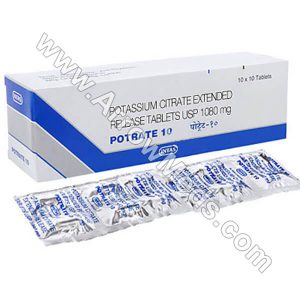

Last Updated on

Last Updated on


Description
What Is Potrate 10 mg?
Potrate 10 mg is a tablet containing potassium citrate 10 mg, which is a mineral salt that can help make urine alkaline and can help to replace potassium. It is prescribed for the prevention of stone formation, and to correct potassium deficiency. It’s made by Indian pharmaceutical company Intas Pharmaceuticals Ltd, which makes generic medicines for many countries. With Potrate 10 mg tablets, you will get 10 tablets on each strip so that it’s easy to dose and track when using these tablets.
What Is Potrate 10 mg Used For?
Potrate 10 mg is used in cases of potassium deficiency (hypokalemia) when inadequate intake or retention of potassium is found in the body. Low potassium can lead to weakness, cramps and an irregular heart beat. It is also used for recurrent kidney stones, hard mineral deposits that may develop in the kidneys when urine becomes too acid—such as calcium kidney stones.
How Does Potassium Citrate Work?
The potassium citrate mechanism of action begins when the body converts citrate into bicarbonate. This decreases the amount of acid in the urine and increases the urinary pH. Less acidic urine means that the minerals of stones do not clump together. Citrate also complexes with calcium within the urine, reducing the amount of calcium available to form calcium kidney stones. The potassium part is meant to replace potassium lost by your body and is used to help maintain normal nerve, muscle and heart activity.
Potrate 10 mg Dosage
Importance of correct dosing because insufficient dosage can not prevent stone formation, can not correct deficiency and excess can cause the potassium to be raised too high. The dose is determined by your health condition, blood potassium, urine PH (pH), kidney function and other medications. Take the tablet whole, with a full glass of water, at the time recommended (usually after eating), as directed.
In case you forget to take one of the doses of Potrate 10 mg, take it at the time you remember. When it’s nearly the time for the next dose, skip the missed dose and take the next dose as scheduled. Never double up a dose. Continue to take your medicines at the same times all day.
Don’t take excessive potassium citrate, as it may over-accumulate potassium. If you think you may have an overdose, get emergency medical assistance immediately. The symptoms can be muscle weakness, tingly, slow or irregular heartbeats, nausea or confusion. Never delay treatment for signs and symptoms worsening, and you should take the medicine packaging with you.
Potrate 10 mg Benefits
The potassium citrate benefits of this medicine cover both body and mind.
- Prevents recurrent kidney stones
- Lowers formation of calcium kidney stones
- Raises urinary pH
- Treats acidic urine
- Restores low potassium levels
- Supports muscle function
- Supports heart rhythm
- Reduces muscle cramps
- Less worry about stone recurrence
- Fewer painful episodes
- Better daily comfort
- Improved confidence
- Better sleep
- Reduced stress about health
Potrate 10 mg Side Effects
- Nausea
- Stomach upset
- Diarrhea
- Abdominal pain
- Gas or bloating
- Loose stools
- Skin rash
- Dizziness
- Tingling in hands or feet
- Mild muscle weakness
- Headache
- Hyperkalemia (high potassium)
- Irregular heartbeat
- Severe stomach pain
- Black or bloody stools
- Gastrointestinal ulcers or blockage
- Severe allergic reaction
- Muscle paralysis
Potrate 10 mg Precautions and Warnings
- Do not use it if you have high potassium levels.
- Do not use it in case of severe kidney disease or renal failure.
- Not for people who have active infection of the urinary tract due to some bacteria.
- Exercise due caution with stomach ulcers/digestive blockage.
- Notify your physician if you have heart issues before using.
- No potassium supplements/salt substitutes unless directed.
- Tell your doctor if you are taking ACE inhibitors, diuretics and other drugs.
- Have blood potassium and kidney tests periodically.
- Please consult the doctor before use in pregnancy and lactation.
FAQs
Is Potrate 10 mg used for kidney stones?
Yes. Potrate 10 mg is commonly prescribed to prevent recurrent kidney stones, especially calcium and uric acid stones. Increases the pH and citrate in the urine, which prevents the formation of stone minerals.
How does potassium citrate prevent kidney stones?
It reduces the acidity of the urine and raises citrate (which binds calcium). This reduces the crystallization and prevents the development/re-occurrence of calcium kidney stones and might aid in dissolution of some uric acid stones.
When should Potrate be taken?
Follow the directions of your doctor to take Potrate with meals or within 30 minutes after meals. Food decreases stomach irritation. Evenly distribute doses throughout the day and take the tablet whole with water.
Can Potrate cause stomach upset?
Yes. Stomach upset, nausea, bloating and loose stools are common. It is often better to take potassium citrate tablets with the meals, and a full glass of water. Inform your doctor if symptoms do not go away or if they become worse.
Can potassium citrate increase potassium levels?
Yes. Kidney problems and some medications may cause an increase in potassium, sometimes from eating too much potassium citrate. Your doctor might have you have blood tests periodically so that your potassium doesn’t get too high.
How much water should you drink while taking potassium citrate?
Doctors typically recommend drinking enough water to urinate around 2-2.5 liters a day. Drinking plenty of liquids helps the medicine work, and prevents stones from forming. Follow your provider’s instructions.
Conclusion
Potrate 10 mg tablet from Intas Pharmaceuticals Ltd is a trusted product for treatment of acidic urine treatment, recurrent kidney stones and potassium deficiency with the correct dosage of potassium citrate, which is 10 mg. It increases urinary pH and citrate, which will help prevent calcium kidney stones and maintain normal muscle and cardiac function. Follow the instructions exactly, drink lots of water, and visit your doctor regularly to get the best results.
Reviews
There are no reviews yet.