

Sorry, nothing in cart.
 |
| ||||||||||||||||||||||||||

Alternative Medicine

Zoxan Ointment (Ciprofloxacin)
Just $1.75 /Ointment View Detail This product has multiple variants. The options may be chosen on the product page
Ciprofloxacin Extended Release 1000mg (Generic)
Just $0.9 /Tablet View Detail This product has multiple variants. The options may be chosen on the product page
Ciplox 500 mg (Ciprofloxacin)
Just $0.44 /Tablet View Detail This product has multiple variants. The options may be chosen on the product page
Ciplox 750 mg (Ciprofloxacin)
Just $0.6 /Tablet View Detail This product has multiple variants. The options may be chosen on the product page

Description
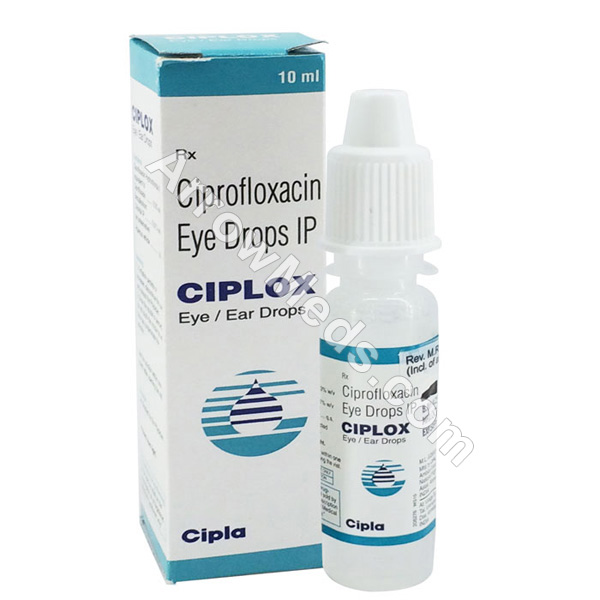
About Ciplox eye drops
Ciplox Eye Drops is an effective antibiotic formulation used for treating bacterial eye infections. It contains Ciprofloxacin, a well-known fluoroquinolone antibiotic that works by stopping the growth of infection-causing bacteria.
This medication helps relieve symptoms such as redness, irritation, and discharge while preventing the spread of harmful microorganisms. By targeting and eliminating the bacteria responsible for the infection, Ciplox Eye Drops promotes faster healing and clearer vision.
Uses of Ciplox eye drops
- Ciplox eye drops are a solution.
- Besides, it is useful to cure bacterial infections in the user’s eye.
- Moreover, it treats conjunctivitis. It is pinkeye.
- However, this is an infectious disease of the membrane.
- This membrane surrounds the outer side of your eyeball & interior of your eyelid.
- Ciplox eye drops also treat corneal ulcers.
- This is an eye infection.
- It is a kind of loss of tissue in the front portion of your eye.
- However, Ciplox eye drops only cure bacterial eye infections.
- Therefore, it will be ineffective in other kinds of eye infections.
- Also, the overuse of the drug results in its reduced efficacy.
How Ciplox Eye Drops Work
Ciplox Eye Drops is a potent antibiotic that treats bacterial eye infections by stopping the growth and multiplication of bacteria. Its active ingredient, Ciprofloxacin, works by inhibiting the bacterial enzyme DNA-gyrase, which is essential for the replication and uncoiling of bacterial DNA. This interference ultimately leads to bacterial cell death. Ciplox Eye Drops are effective against a broad range of bacteria, helping to quickly relieve infection and associated symptoms.
How to Use Ciplox Eye Drops
- Always use Ciplox Eye Drops exactly as prescribed by your doctor.
- Follow the directions carefully, even if your symptoms start to improve.
- This medicine is for ophthalmic (eye) use only.
- Wash your hands thoroughly before and after applying the drops.
- Keep the tip of the dropper away from your eye and skin to avoid contamination.
- Do not touch your eyelid or any other part of your skin with the dropper tip.
- Remove contact lenses before using the drops. Consult your doctor about when it is safe to wear lenses again.
- Do not reinsert contact lenses if your eyes are infected or irritated.
- Tilt your head back and place the prescribed number of drops into your eye.
- Close your eyes gently after application.
- Apply gentle pressure on the inner corner of the eye (near the nose) for 1–2 minutes to ensure the medicine stays in the eye.
By following these steps, the medication can work effectively to treat your eye infection.
Dosage
For Adults:
- Bacterial Eye Infections:
- Instill 1–2 drops every 2 hours into the affected eye(s) for the first 2 days.
- Then, continue with 1–2 drops every 4 hours for the next 5 days.
- Corneal Ulcers:
- Day 1: Apply 2 drops every 15 minutes for 6 hours.
- Then, 2 drops every 30 minutes for the remainder of the day.
- Day 2: Apply 2 drops every 60 minutes.
- Day 3 onwards: Apply 2 drops every 4 hours.
- Total treatment may continue for up to 14 days, as prescribed by the doctor.
For Children:
- Bacterial Eye Infections:
- Instill 1–2 drops every 2 hours into the affected eye(s) for the first 2 days.
- Then, continue with 1–2 drops every 4 hours for the next 5 days.
- Corneal Ulcers:
- Day 1: Apply 2 drops every 15 minutes for 6 hours.
- Then, 2 drops every 30 minutes for the remainder of the day.
- Day 2: Apply 2 drops every 60 minutes.
- Day 3 onwards: Apply 2 drops every 4 hours.
- Treatment may continue for up to 14 days, as directed by the doctor.
ℹ
Note
Always follow your doctor’s instructions. Do not change the dosage or stop treatment early, even if symptoms improve.
Side effects
- Rash
- Hives
- Itching
- Red, swollen,
- Blistered, or peeling skin with or without wheezing, fever
- Tightness in your chest
- The tightness of the throat
- Trouble breathing
- Unusual hoarseness
- Swelling of the mouth
- Change in eyesight, eye pain
- Or very bad eye irritation
- Eye or eyelid swelling
- Joint pain or swelling
- Trouble talking or swallowing
- Swelling of lips, tongue, throat, or face
Some more side effects are:
- Unpleasant taste in the mouth, redness
- Burning
- Numbness
- Itching
- The discomfort of the eye,
- The feeling that something sticks in your eye
- Your eyes appear tired, tainted, or swollen
Precautions
- Allergy to any constituent of Ciplox eye drops
- If you have an allergy to this drug
- You must not alter the dose of Ciplox eye drops without the doctor’s consent
- A user needs to be cautious while driving
- You should be careful while doing things that need clear eyesight
- Users should wear sunglasses because bright light may be a problem
- You must not apply the drug for longer than advised. It can start the second infection
- However, reactions with other drugs can occur
Drug Interactions
Ciplox Eye Drops may interact with certain medications and substances. While it is applied topically to the eyes, it is important to be aware of potential interactions:
- Other Eye Medications: Using multiple eye drops at the same time may reduce the effectiveness of Ciplox. Wait at least 5–10 minutes between different eye drops.
- Contact Lenses: Do not wear contact lenses during treatment if your eyes are infected, unless advised by your doctor. Some eye drops may temporarily discolor soft contact lenses.
- Systemic Medications: Although interactions with oral or injectable drugs are rare due to local application, always inform your doctor of all medications you are taking.
- Allergies: Avoid Ciplox Eye Drops if you are allergic to Ciprofloxacin, other fluoroquinolones, or any ingredients in the formulation.
ℹ
Note
Always consult your healthcare provider before combining Ciplox with other medications to ensure safe and effective treatment.
FAQs
What should I do if I miss a dose of Ciplox Eye Drops?
If you miss a dose of Ciplox Eye Drops, apply it as soon as you remember. However, if it is almost time for your next scheduled dose, skip the missed dose and continue with your regular dosing schedule. Do not apply two doses at the same time to make up for the missed one.
What happens if someone uses too much of Ciplox Eye Drops?
Using more than the recommended amount of Ciplox Eye Drops is unlikely to cause serious harm, but it may lead to increased eye irritation, redness, watering, or discomfort. If an overdose happens accidentally, simply rinse your eyes gently with clean water. Avoid applying any more drops until the next scheduled dose. If irritation continues or you feel unusual symptoms, contact your doctor for guidance.
Other Related Eye Drops:
- EPINA EYE DROP (EPINASTINE)
- DORZOX EYE DROP (DORZOLAMIDE)
- HYPERSOL EYE DROPS (SODIUM CHLORIDE)
- GATIQUIN HS EYE DROP (GATIFLOXACIN)
Reviews
There are no reviews yet.